About
Research with direction
I'm a UX researcher with over twenty years of experience across consumer products, enterprise platforms, and frontier AI. I've worked at Google, Microsoft, Amazon, and Meta Reality Labs Research, and I've built research functions from scratch at two Berlin-based startups. My career has been shaped by a consistent focus: designing research that generates the right evidence at the right moment in the product lifecycle, and building the systems that make that evidence travel.
Research Philosophy
Speed vs. Velocity
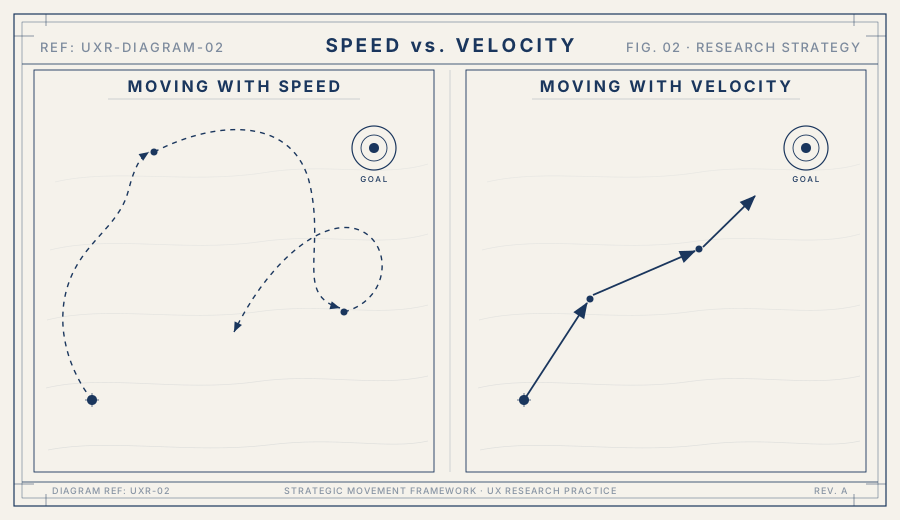
Most product organizations optimize for speed. They move fast: hypothesize, design, test, ship. But speed only measures rate of movement. It says nothing about direction.
I've watched teams iterate rapidly on solutions to problems they hadn't diagnosed. I've seen A/B tests return inconclusive results because the test variables weren't grounded in user evidence. I've seen features ship that addressed symptoms while root causes went unexamined.
Velocity is different. Velocity is speed with direction. Research provides the direction.
In practice, this means resisting the pressure to jump to solutions. Before a team starts whiteboarding fixes or scoping A/B tests, I spend one to two sprints combining telemetry analysis with qualitative observation. The quantitative data reveals the symptom — where in the funnel users are dropping off, which features show declining engagement, what the behavioral patterns look like. But the symptom is not the cause. Qualitative research — watching users encounter the problem, hearing how they describe it — reveals the why. Only after both the where and the why are established does solution design begin. That sequence is the difference between speed and velocity: you move slower at the start, but every step after that is in the right direction.
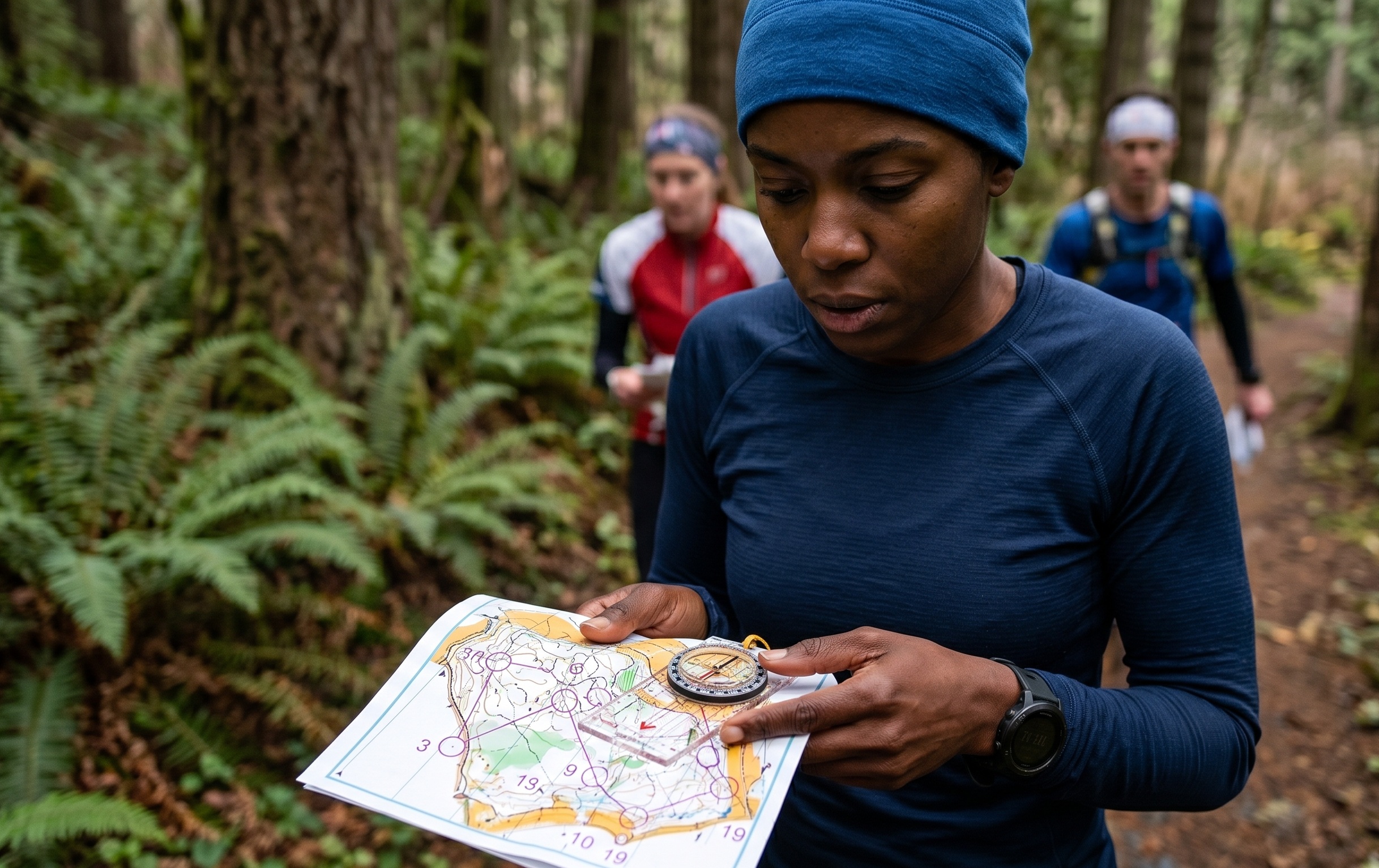
I think of research as orienteering. The product vision is the destination. Research is the map and compass. Without it, you can move fast and still be lost. With it, every step is deliberate.
Research Thinking
This is what I call Research Thinking: an iterative process focused on understanding underlying customer needs and revealing root causes, so that product decisions add genuine value rather than incremental surface-level improvements.
I saw this pattern at GetYourGuide, where a team was preparing to A/B test changes to the shopping cart to close a mobile conversion gap. Diagnostic research revealed the cart had nothing to do with the problem — the root cause was an availability check buried at the wrong point in the funnel. The A/B test would have taken over a year and tested the wrong variable. Read the full case study
Practice Building
Building research practices
I've built research functions from the ground up twice. At GetYourGuide, I started as the sole researcher, grew the team to three, secured a dedicated Research Operations Manager, and implemented Chattermill, an NLP semantic analysis platform that processed 2.5 million customer reviews into dashboards used across design, product, and the C-suite. At Choco, I established the intake process, insights repository, consultation model, and a bi-weekly training program that reached 25+ designers, PMs, engineers, and business partners. In both cases, the objective was the same: build research capability that extends beyond the research team, so evidence-driven thinking becomes an organizational practice rather than a service dependency.
At Meta Reality Labs Research, I applied this orientation to a different problem. After watching external practitioners at a UX conference use AI tools in ways that outpaced our internal practices, I built a point of view, partnered with a colleague, and made the case to leadership. That work led to AI4UXR, a formal workstream with 8+ dedicated FTEs exploring AI tools, developing best practices, and training researchers across the organization.
Domain Expertise
Frontier AI research
For four years at Meta Reality Labs Research, I led research across technically dense product spaces: contextual AI, always-on assistants, agentic systems, and multimodal input for smart glasses. This included multi-phase concept testing on AI agent architectures, adversarial evaluation of novel input modalities, and the development of GenAI integration frameworks for research teams.
Remote Expert Assistance
In one evaluative study, I designed a controlled task where participants built a complex structure from an unfamiliar construction kit, guided only by a remote expert viewing their first-person video feed from smart glasses. The remote assistance tool proved highly effective — every participant completed the build in under 30 minutes without instructions or prior experience. When we compared conditions with and without eye-tracking data, the null result was the finding: eye tracking added no measurable value for near-field tasks — tasks performed at arm's length where participants could pick up or point to parts directly. We hypothesized there would be more value for far-field tasks, where the work requires interacting with objects not immediately in front of the participant or moving through a space to complete the task.
Activity Detection
Another study required solving a fundamental evaluation problem: a smart glasses activity detection system that quantified users' daily routines in a personalized dashboard could not be meaningfully evaluated in a lab session, because the dashboard only becomes useful after days of accumulated data. I designed a multi-day wear study where participants took prototype glasses home over a long weekend, then returned to review their personalized dashboards in depth interviews. The extended-use design surfaced which use cases participants genuinely valued and identified privacy concerns that short-session testing would have missed entirely.
International research
I have conducted field research in the United States, Brazil, Mexico, China, Korea, and Germany. International research requires more than translating a protocol. It requires understanding how cultural context shapes the research questions themselves, adapting methods and materials to be culturally valid, and recognizing when findings diverge not because of surface-level preference differences but because of fundamentally different cultural frameworks.
At Microsoft, I led a multi-method international study evaluating a pre-category voice assistant concept simultaneously in the US and China — before Amazon Echo had shipped. The work required phased card sorting with bilingual materials, culturally adapted concept videos, and cross-cultural industrial design evaluation with physical mockups placed in participants' homes. Read the full case study
Career
Work history
Staff User Experience Researcher
Meta Reality Labs Research · Redmond, WA
2021–Present
User Research Lead
Choco Communications · Berlin, Germany
2020–2021
Sr. User Researcher & Manager
GetYourGuide · Berlin, Germany
2018–2020
Sr. User Researcher
Amazon · Seattle, WA
2016–2017
Sr. User Researcher
Microsoft · Redmond, WA
2012–2016
User Experience Researcher
Google · Seattle, WA
2006–2011
Games User Researcher
Microsoft Game Studios · Redmond, WA
2001–2006
Selected
Publications & presentations
Panel Moderator: From Experimentation to Implementation: Encouraging and Nurturing Successful AI Applications in UXR
UX360 Research Summit, Atlanta, GA · 2026
Invited Speaker: Evolving UX Research in an AI World
AIBA, Katowice, Poland · 2025
Conference Chair
UX360 Research Summit 2025, Berlin · 2025
Panel Moderator: Here and Now: AI in UX Research
UX360 Research Summit, Berlin · 2025
Invited Speaker: The R.I.T.E. Method – Driving Collaboration Between Research and Design
UX360 Research Summit, Virtual · 2025
Panel Moderator: From Pixels to Algorithms: Enhancing UX with AI
UX360 Research Summit, Virtual · 2025
Co-author: "STMG: A Machine Learning Microgesture Recognition System for Supporting Thumb-Based VR/AR Input"
CHI 2024 Conference Proceedings, ACM Digital Library · 2024
Keynote Speaker: Satisfying and Delighting, Early and Often
4th International Symposium on UX and Usability, São Paulo, Brazil · 2010
Invited Speaker: Game Usability: Improving Games Through User Research
Ecole Nationale du Jeu et des Médias Interactifs Numériques · 2006
Conference Presenter: Do-It-Yourself Usability: How to Use User Research to Improve Your Game
Game Developers Conference · 2004–2006
Invited Speaker: Usability in Games
Victoria University, Wellington, New Zealand · 2005
Conference Presenter: Usability and Games: User-testing Concepts and Case Studies
Montreal Game Summit, Montreal, Canada · 2004
Co-Author: "Concurrent vs. Post-Task Usability Test Ratings"
Proceedings of the CHI Conference · 2001